
What If Regulation Isn’t the Problem?
Sep 17, 2026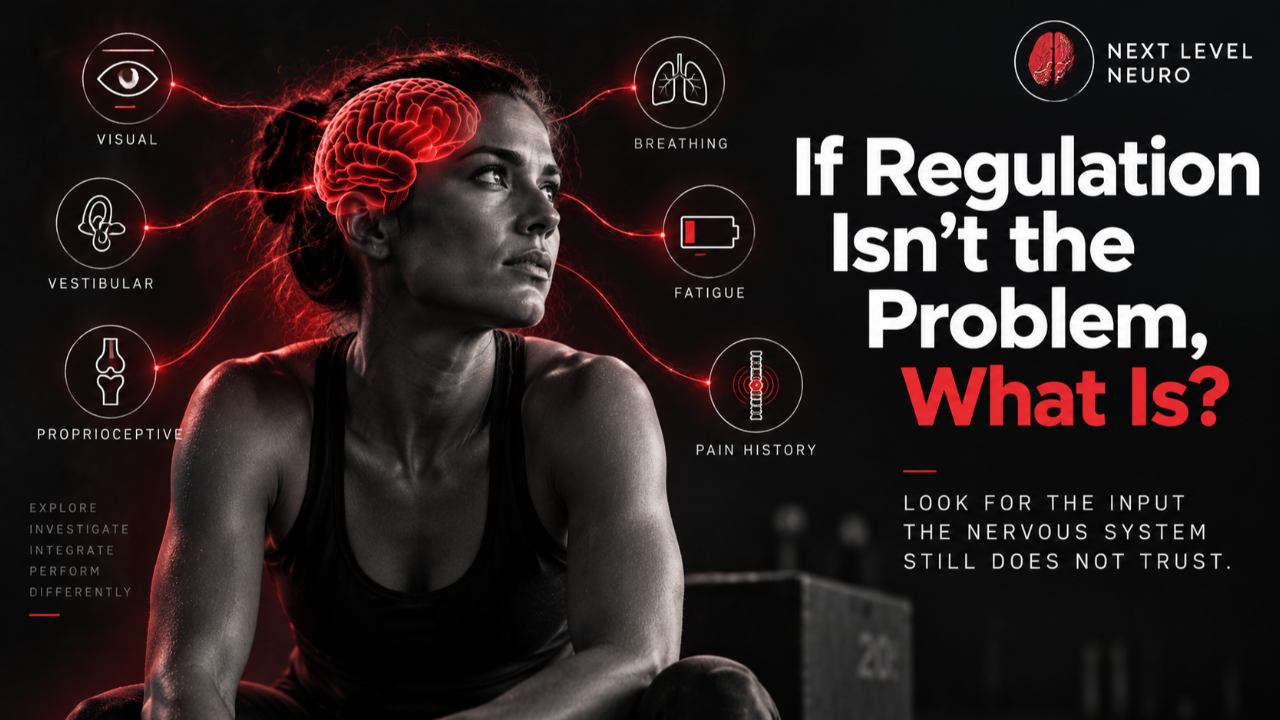
What do you do now? Your client looks regulated. Their nervous system seems ready. But their movement, pain, strength, or performance still isn’t changing. Now what?
The question this article answers is simple:
What do you do when your client looks regulated, their nervous system seems ready, but their movement, pain, strength, or performance still isn’t changing?
The answer is this....
Regulation may have been the right place to start, but it may not be the thing holding them back anymore.
You did what we teach first.
You worked on regulation.
You gave the nervous system a better opportunity to feel safe, adapt, and respond.
But the outcome still didn’t change.
Now what?
We have spent a lot of time at Next Level Neuro talking and teaching regulation.
For good reason.
One of the foundational ideas we teach is....
Regulation is the new strength.
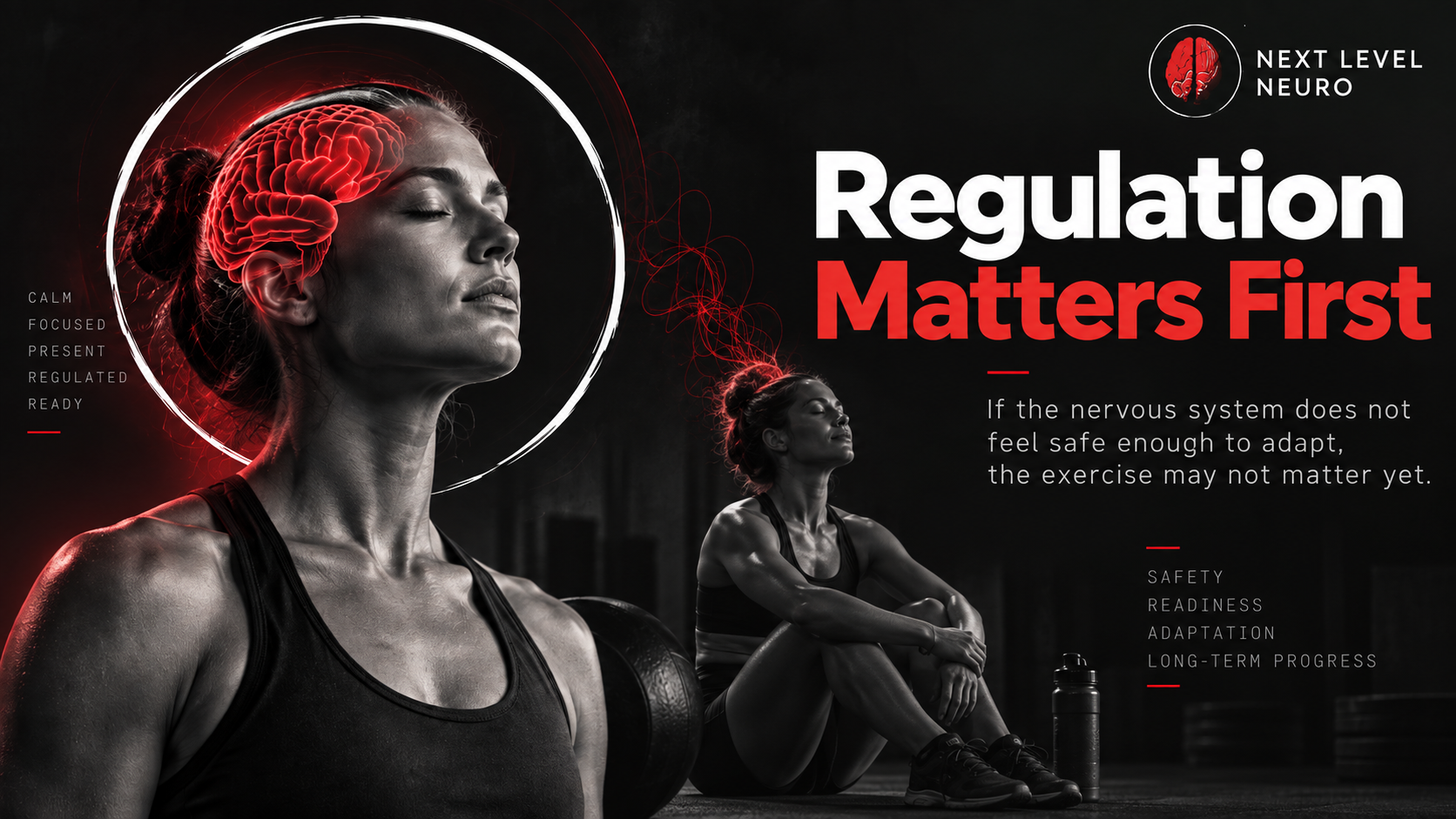
If the nervous system does not feel safe enough to adapt, the quality of your exercise selection may not matter very much.
You can have the right strength program, the right mobility work, the right rehab progression, and the right exercise selection, but if the brain is still prioritizing protection, it may limit the very outputs you are trying to improve.
That can show up in movement.
Pain.
Tension.
Breathing.
Recovery.
Focus.
Strength.
Performance.
So yes, regulation matters.
It matters a lot.
And if you missed our free Regulation Masterclass, you can watch it here:
https://www.nextlevelneuro.com/regulation
But this is where the conversation needs to go next.
Because regulation is not the answer to every problem.
Sometimes the client is regulated enough.
And you know the nervous system is ready.
As you watch your client unfold in front of your eyes, you recognize that something still is not changing.
So you ask yourself....
If regulation isn’t the problem, what is?
That is what we are going to look at in this article.
1. Your Client Is Regulated. Now What?
This is where practitioners can get stuck after they watch our regulation workshop.
Many forget the other levels we teach, so you have multiple areas of insertion.
Once we learn something new, there is a tendency to start seeing everything through that lens.
We have all been through that at one time or another.
It goes something like this after you watch our regulation video.
Client has pain?
Regulation.
Mobility isn't improving?
Regulation.
Performance is inconsistent?
Regulation.
But we teach our students that Applied Neurology requires us to keep asking another question and another…
Regulation is first, but there are more rungs on that ladder.
Let's investigate.
What does the nervous system need next?
We have taught you, and we still stand by our teachings, that regulation is the foundation.
But as in all things, the nervous system isn't necessarily the entire intervention.
In fact, we define regulation as the ability to remain balanced and adaptive under changing circumstances.
It isn't about keeping someone permanently calm.
A healthy nervous system needs to mobilize when necessary, recover afterward, and move efficiently between states.
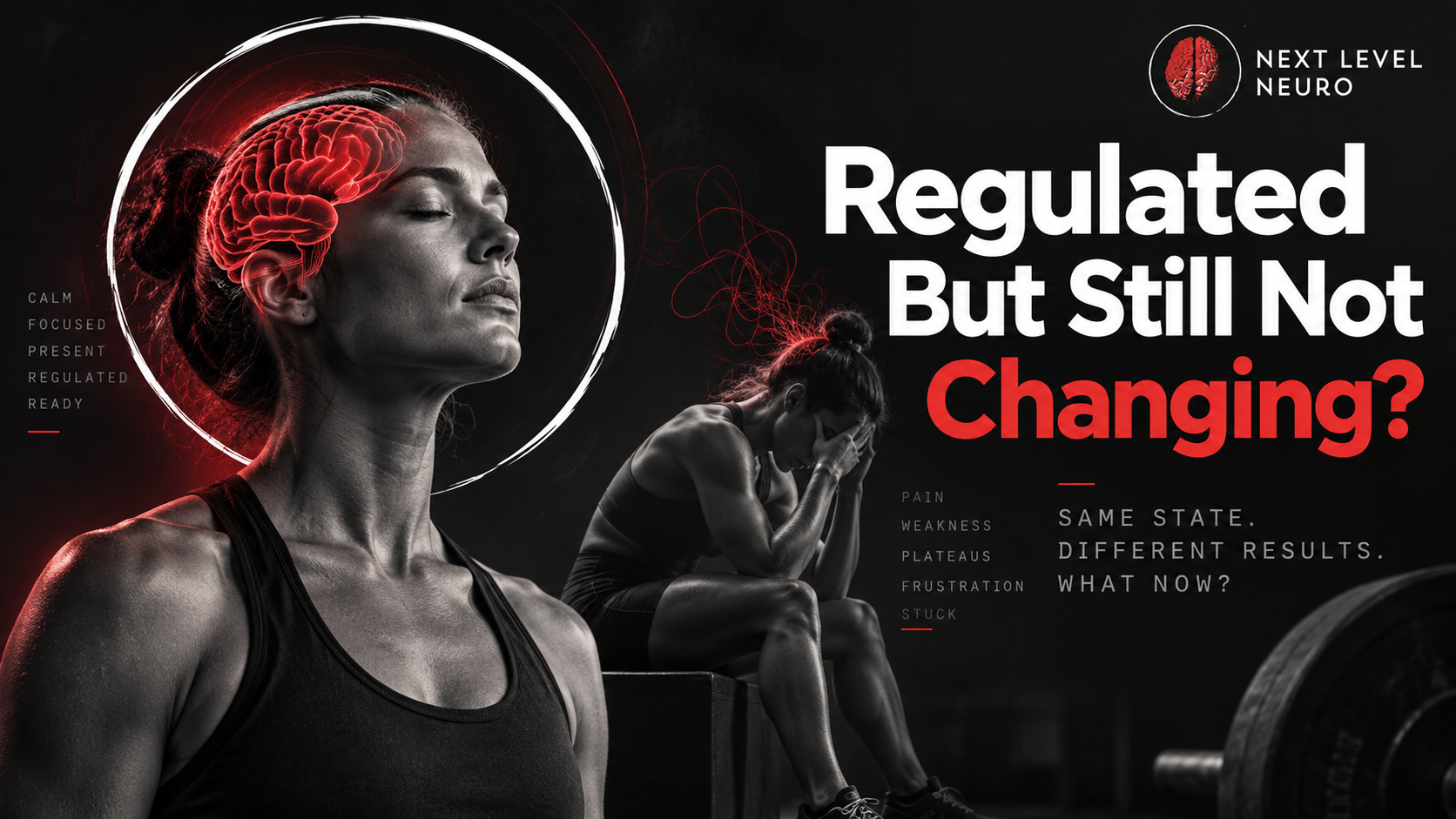
So let's say you've addressed regulation.
You reassess.
Nothing changes.
That's information.
Now we move up the framework ladder.
For more on that framework, click here.
2. Maybe the Nervous System Needs Fuel
Before asking the brain to process more information, we have to consider whether it has the resources to do it.
This is easy to overlook.
A client can appear regulated and still be dealing with issues involving sleep, hydration, nutrition, oxygenation, recovery, or overall energy availability.
In our Regulation training, we talk about the hypothalamus as an important part of internal regulation, including processes related to circadian rhythm, temperature, sleep, hunger, thirst, hormones, and energy stability.
Many times we are taught to throw a new neurological drill at it.
But we teach from a different perspective here at Next Level Neuro....
Does this nervous system have what it needs to do what I'm asking it to do?
3. Maybe It's an Input Problem
Now we get into one of the areas where Applied Neurology can dramatically expand the practitioner's toolbox.
Your brain doesn't experience the world directly.
It receives information about the world and the body through sensory systems, interprets that information, and produces an output.
So if regulation looks good but the output still isn't where we want it, we may need to investigate the quality of the incoming information.
That could mean looking at…
- Vision: What information are the eyes providing?
- Vestibular function: How well does the brain understand head movement, orientation, acceleration, and balance?
- Proprioception: How clearly does the brain know where the body is in space?
- Interoception: How accurately is the nervous system interpreting what is happening inside the body?
This is one reason we teach the assess and reassess process so frequently at NLN.
We don't want to guess.
We stress to our students over and over again.
Baseline → Input → Reassess.
If the output improves, we have useful information.
If it gets worse, that is useful information too. The response helps determine whether we continue, regress, modify, or investigate somewhere else.
4. What If the Drill Works...Until They Move?
Now things get really interesting.
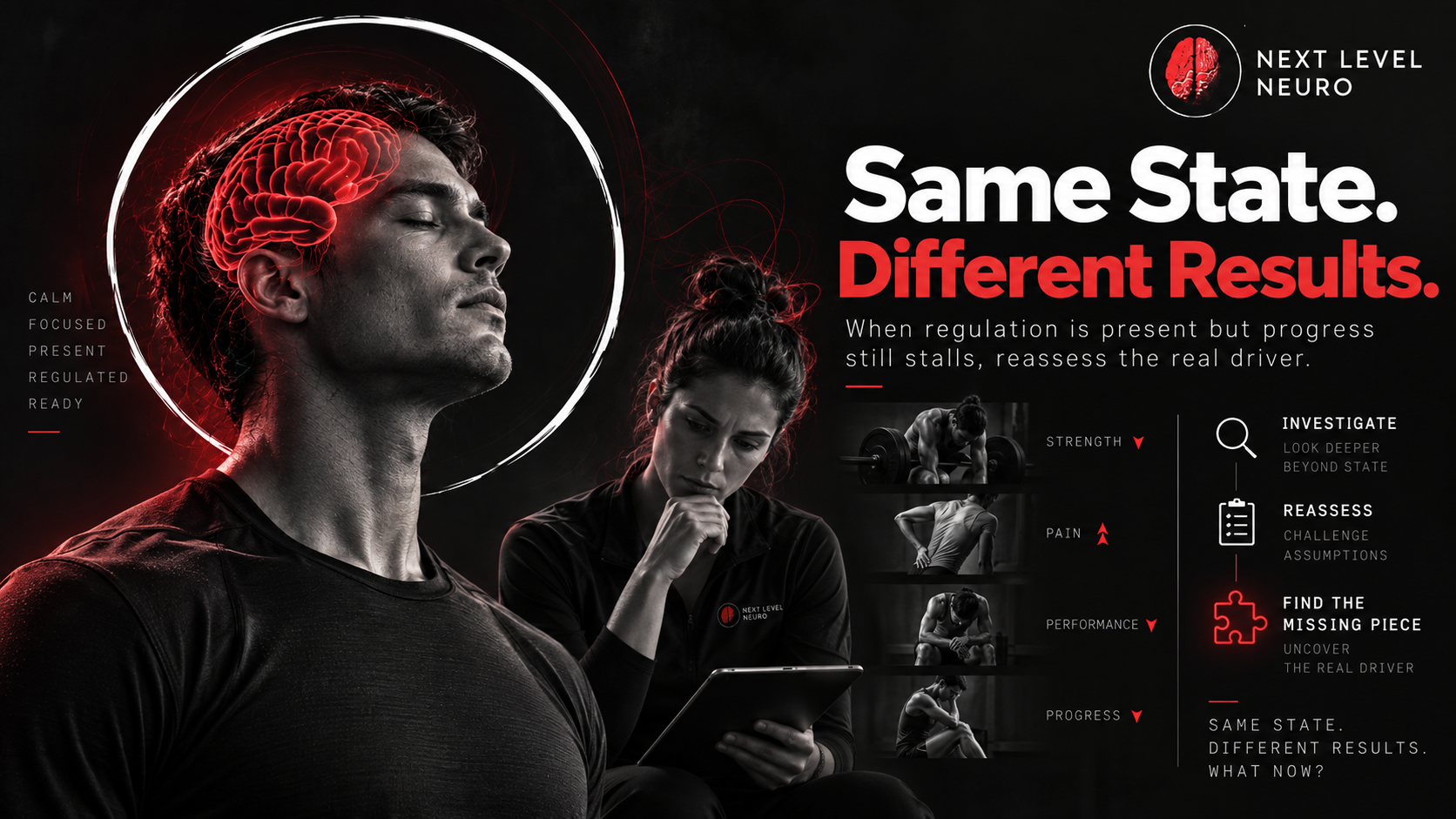
Let's say you find an input that produces an immediate improvement.
Their shoulder rotation improves.
Pain decreases.
Balance gets better.
Their breathing changes.
Great.
Then they stand up.
The improvement disappears.
Or they walk.
Gone.
They pick up a weight.
Gone.
They start running.
Gone.
This tells us something different.
We may no longer have an input problem.
We may have an integration problem.
The nervous system can access the improvement under one condition but cannot yet maintain it when additional demands are introduced.
That distinction matters.
The Regulation masterclass gives a simple example of this progression.
One of the midbrain drills combines vestibular activation with breathing so the nervous system isn't simply experiencing safety at rest.
It begins pairing that state with movement.
The training can then be progressed toward load or speed when that's what the individual needs.
That's integration.
5. Can They Keep It When Life Gets Harder?
Eventually, we have to stop testing everything in perfect conditions.
Your athlete isn't competing in a quiet treatment room.
Nor is your client navigating life without stress.
None of your patient doesn't perform every movement slowly, rested, and completely focused.
So once the nervous system can regulate, process the necessary inputs, and integrate them into movement, we add another layer…
Reactivity.
Can they maintain the change when we add...
Speed?
Decision-making?
Cognitive load?
Fatigue?
Unpredictability?
Pressure?
This is where we're no longer simply asking whether the nervous system can produce an output.
We're asking whether it can keep producing it when the environment becomes more demanding.
Even regulation itself eventually needs to be tested this way. In the masterclass, we describe progressing regulation work by eventually introducing variables such as stress, fatigue, longer duration, and real-world conditions rather than keeping the nervous system permanently inside an easy exercise.
The Neuro Advantage Ladder
This is why we created the Neuro Advantage Ladder.
It gives practitioners an order for thinking…
Regulate → Fuel → Input → Integrate → Add Reactivity
Think about how different that is from collecting another 100 neurological drills.
A drill doesn't tell you when to use it.
A certification full of information doesn't necessarily tell you where to start.
And knowing that regulation matters doesn't mean regulation is always the answer.
What practitioners need is a way to organize their thinking.
Is regulation limiting the system?
If not, does it have adequate fuel?
If yes, what sensory input might be missing or inaccurate?
If we improve the input, can the nervous system integrate the change into movement?
And once it can, does that improvement survive speed, fatigue, complexity, and pressure?
That's the ladder.
And here's the part I want you to remember:
You don't automatically climb to the top. You earn the next rung through reassessment.
Your client's nervous system tells you where to go.
Our job is to learn how to listen.
You Don't Need More Information.
You Need a Framework for Using It.
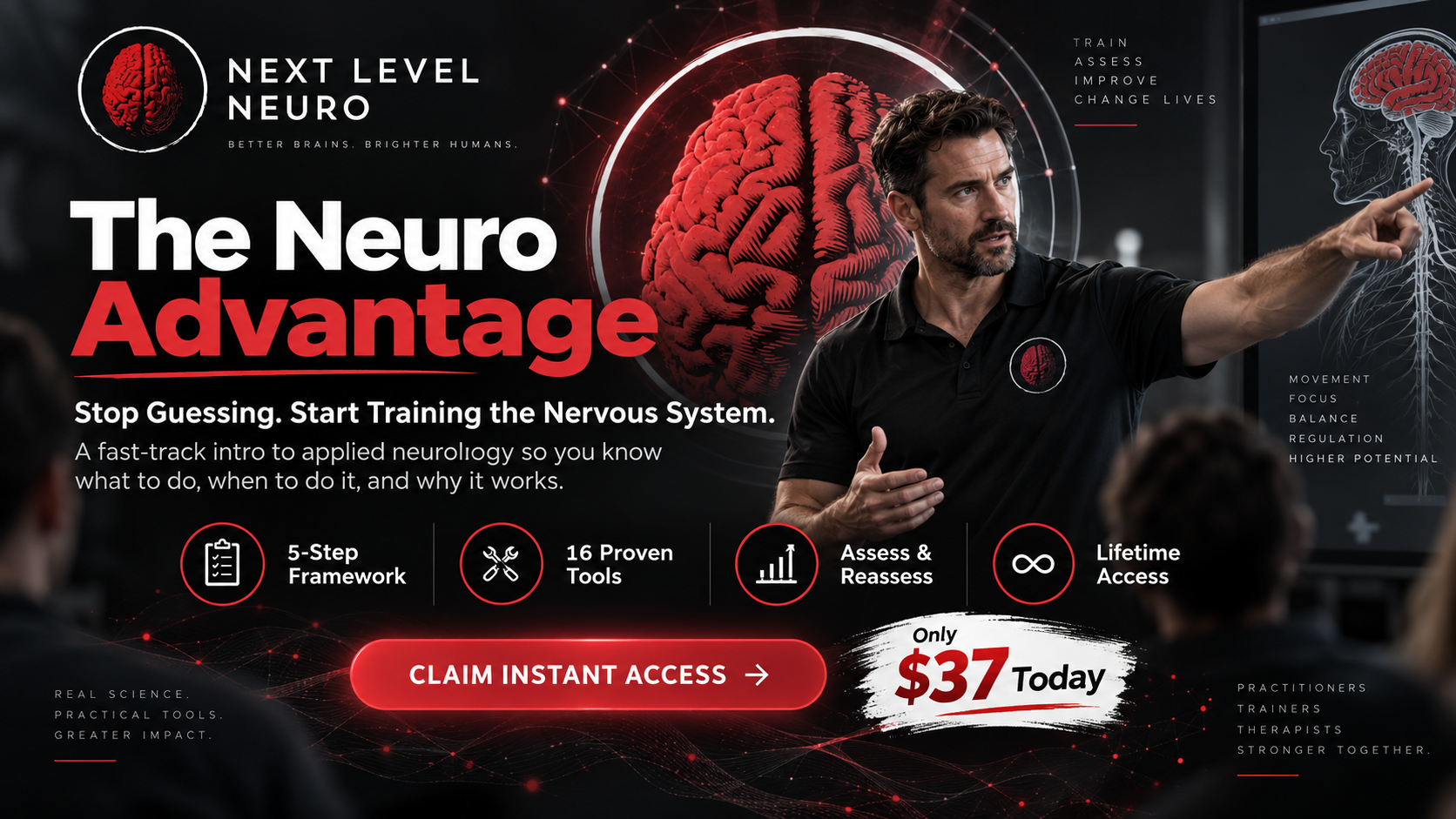
That's exactly why we created The Neuro Advantage.
In about two hours, we're going to walk you through our framework and give you 16 neurological tools you can begin testing and applying.
Not because you need another giant library of drills.
Because you need to understand where a tool belongs, why you might use it, and what the reassessment tells you to do next.
The Neuro Advantage is $37.
GET THE NEURO ADVANTAGE FOR $37
Want more information on our Mentorship
and Programs?
We hate SPAM. We will never sell your information, for any reason.
