From Sessions to Everyday Life: 10 More Applied Neurology Questions Answered
Sep 30, 2026
Breathing, body awareness, movement confidence, and how to help clients use what they gain beyond your session.
Your client moves better in the session.
They feel more confident, and you both leave encouraged.
Then they come back and say, “I felt great here, but I couldn’t get it to work the same way at home.”
What needs to happen between making progress in a session and being able to use it in everyday life?
That question takes us into breathing, body awareness, familiar movement habits, and the demands of the environment.
It also raises some other questions....
* When should you help someone settle down?
* When might they benefit from more activation?
* And how do you incorporate this work into the strength or rehabilitation program you already use?
In our first 15 FAQs, we explored the foundations of Applied Neurology.
These next 10 take us further into applying those ideas, from helping clients notice what is happening in their bodies to building confidence in movement as they age.
Because the goal is for clients to use what they gain with you when they return to their work, their sport, and their lives.
16. Why do clients fall back into old movement patterns, even after making progress?
Because being able to perform a movement differently once doesn’t mean that new option has become familiar, reliable, or easy to repeat.
In your session, the client has your guidance, a controlled environment, and time to focus.
Outside that setting, they may be moving faster, carrying more weight, feeling tired, or dividing their attention.
The familiar strategy may return when the demands increase.
That doesn’t automatically mean the session failed.
It gives you something specific to investigate...
- Can they repeat the improvement without your cues?
- Does it hold when you add a little load?
- What happens when the movement becomes more complex?
- Can they practice it comfortably between sessions?
Regulation may be part of that picture, particularly when the client struggles to tolerate the demands of practice.
But they may also need more repetition, strength, recovery, or a more manageable progression.
The next step is to find out what helps the improvement become repeatable.
Our free Regulation Is the New Strength workshop explores the role of regulation in this process, with practical demonstrations and an introduction to our approach.
👉 Watch the free Regulation workshop
17. How does breathing influence movement, performance, and recovery?
Breathing has to meet the demands of what someone is doing.
Walking, lifting, sprinting, and recovering between efforts place different demands on the body.
That makes breathing worth observing in context.
Does your client hold their breath during a relatively easy task?
Can they recover between sets?
Does your breathing cue make the movement feel easier, or does it give them one more thing to struggle with?
There isn’t one breathing pattern that belongs in every exercise.
Bracing and a brief breath hold can be appropriate during certain heavy efforts.
The same strategy may be unnecessary during a gentle mobility drill.
Start by noticing whether the breathing strategy fits the task.
If you introduce a change, check whether it improves comfort and performance instead of assuming that slower or deeper is always better.
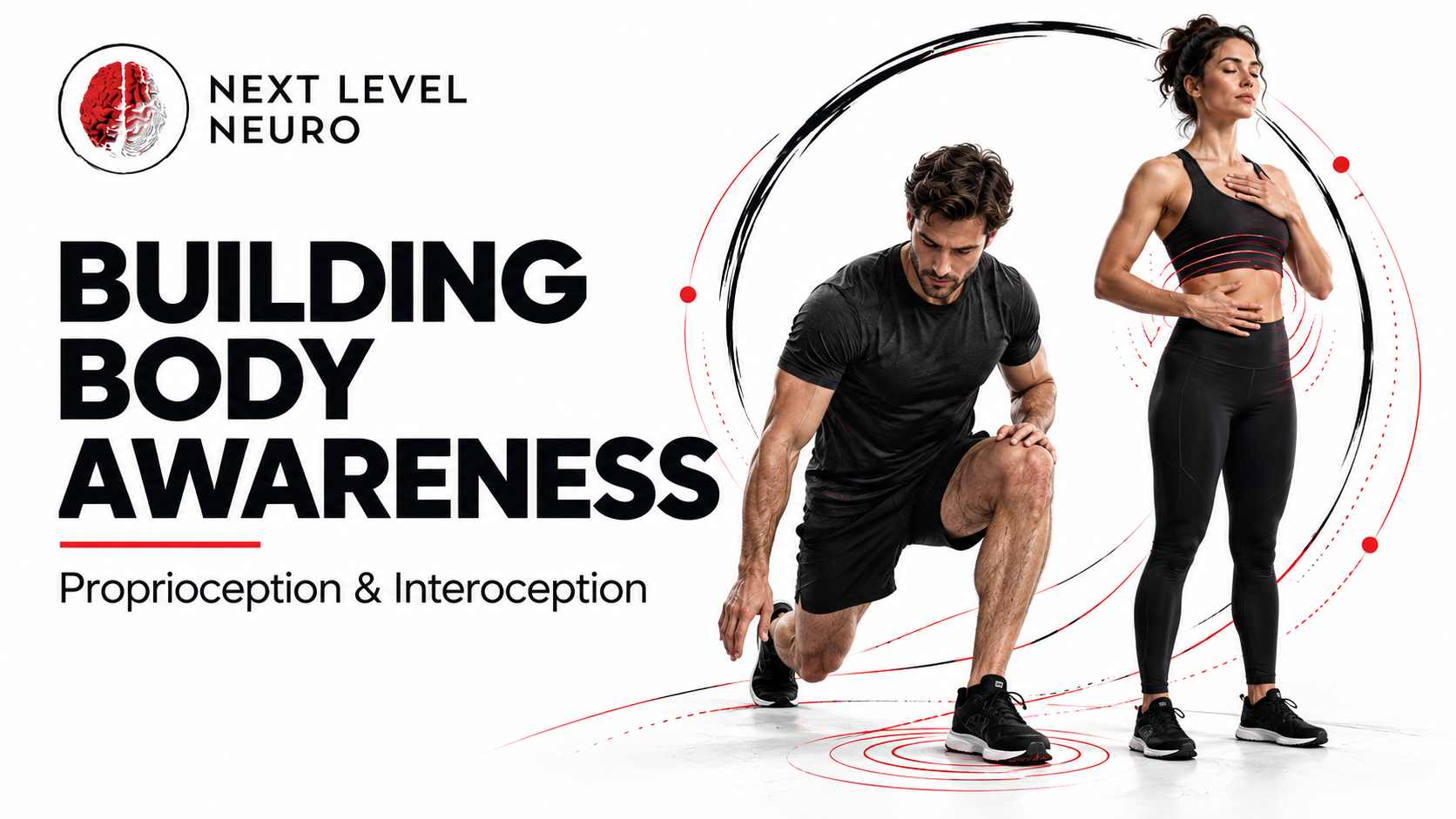
18. What is proprioception, and why does it matter in training and rehabilitation?
Proprioception is your sense of where your body parts are and how they are moving, without having to watch them constantly.
It helps you judge the position of your foot on a step, control your knee during a lunge, and adjust the force you use to hold an object.
It also contributes to coordination and balance.
Think about a client who needs to watch their feet through every repetition.
That observation gives you a useful question: How well can they control the movement with less visual guidance?
It doesn’t diagnose a proprioceptive problem by itself.
The task may also be unfamiliar, too difficult, or affected by other limitations.
Strength tells you something about force production.
Proprioception helps explain how someone senses and controls the movement they are producing.
Both deserve attention.
19. What is interoception, and why do some clients struggle to notice what is happening inside their bodies?
Interoception involves sensing internal body signals, such as breathing, heartbeat, hunger, and fullness.
In a session, you might ask how an exercise feels and get, “I don’t know.”
That answer deserves curiosity.
The person may find it difficult to notice a sensation, describe it, or understand what you are asking.
Try making the question more specific:
- “Does your breathing feel easier, harder, or unchanged?”
- “Where do you notice the effort?”
- “Did that feel comfortable, uncomfortable, or neutral?”
Give them time to answer without suggesting what they should feel.
Body awareness isn’t a test your client has to pass.
Their report is one source of information to consider alongside the movement, performance, and other observations you make.
20. When should you use calming inputs, and when might a client benefit from more activation?
Start with the person’s response and the demands of the next task.
A client who feels overwhelmed may benefit from a simpler activity, a quieter setting, or a brief pause.
Someone preparing for an explosive movement may need a progressive warm-up that helps them become more alert and ready to act.
At NLN, we describe regulation as the ability to adapt as circumstances change.
That includes mobilizing for a challenge and recovering afterward.
Calm is not the goal of every session.
Nor does looking tired automatically mean someone needs more stimulation.
They may need rest, food, a reduced workload, or further evaluation.
Ask: “What state would help this person participate in the next task, and what happens when we adjust the preparation?”
21. How do you integrate Applied Neurology into an existing strength or rehabilitation program?
Begin with a task that already matters to the client.
Maybe that is a squat, reaching overhead, walking, or turning comfortably.
Use that task to connect any additional assessment or input to the work you are already doing.
A practical sequence is:
- Observe the relevant movement.
- Test an appropriate input within your professional scope.
- Check whether the movement changes.
- If useful, incorporate the change into practice.
- Monitor how the client responds as training continues.
For example, if an input appears to help someone turn more comfortably, explore whether that carries into the reaching or stepping task they need.
Give the input a clear job inside the program.
This is how NLN frames integration: assess, apply, reassess, and use the findings to inform your existing practice.
22. Is it harder to change the brain as we get older?
Learning can become more challenging with age, but older adults can still learn skills and improve physical function.
For practitioners, the useful question is how to make practice achievable and worth repeating.
Consider the person’s health, experience, recovery, and starting ability.
That might mean:
- Allowing more time to learn a task.
- Using clear instructions.
- Providing appropriate support.
- Building difficulty gradually.
- Choosing activities that matter to their daily life.
Someone may care far more about navigating their front steps confidently than mastering an unfamiliar exercise.
Make the purpose of the practice clear.
Age should inform your approach, alongside the individual’s abilities and needs.
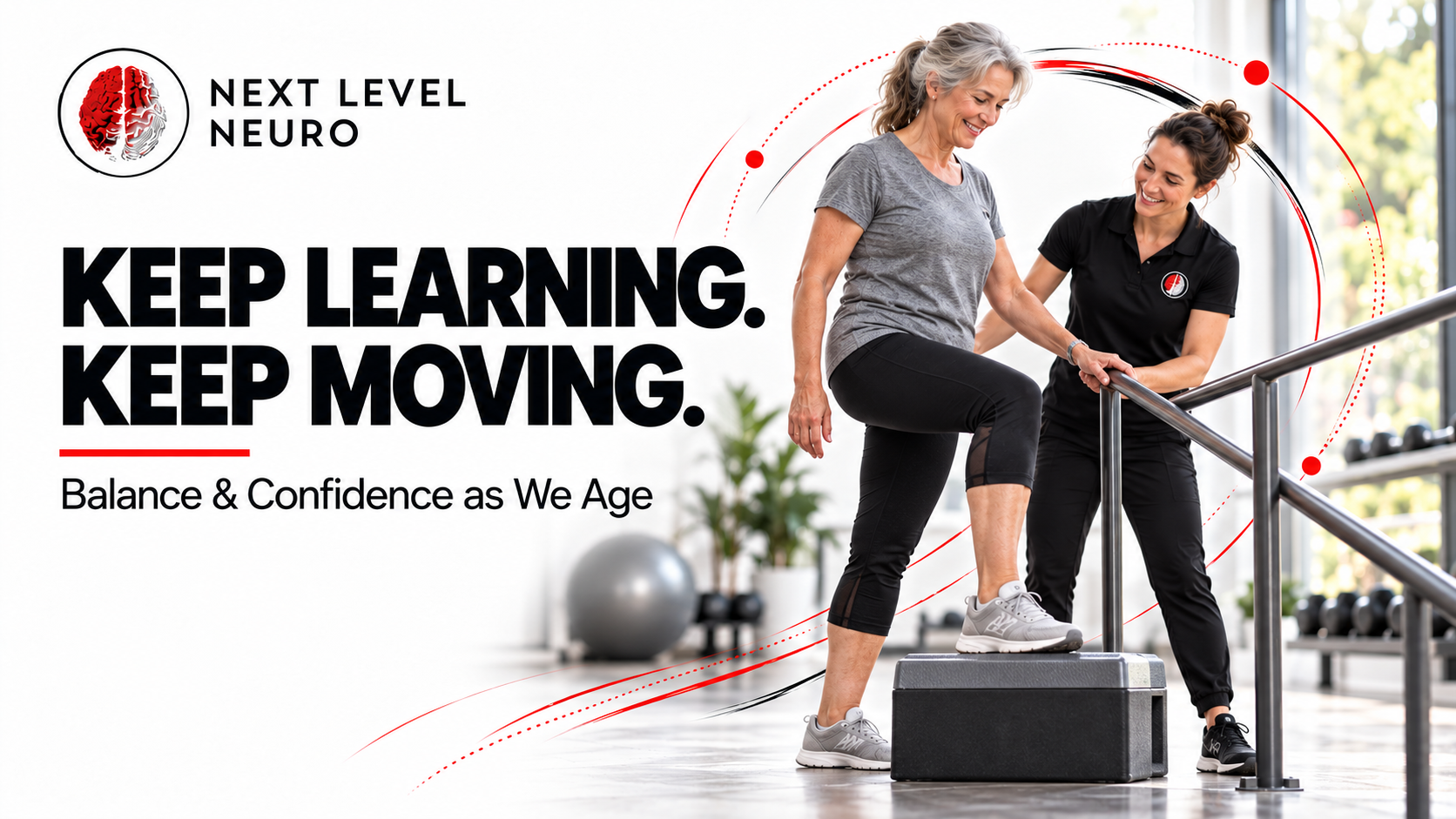
23. What role does the nervous system play in fall risk as we age?
Balance depends partly on receiving and combining sensory information, then coordinating an appropriate response.
But fall risk is broader than any single sensory system.
Strength, vision, medications, blood pressure changes, health conditions, footwear, and environmental hazards can all contribute.
Strength and balance exercises are important parts of fall prevention.
That means an older client who feels unsteady deserves more than a generic balance drill.
Ask when the difficulty happens.
Turning? Getting out of a chair?
Walking in low light?
Managing uneven ground?
Train relevant abilities with appropriate support, and recognize when the person needs additional assessment.
The goal is greater safety and independence in the situations they actually encounter.
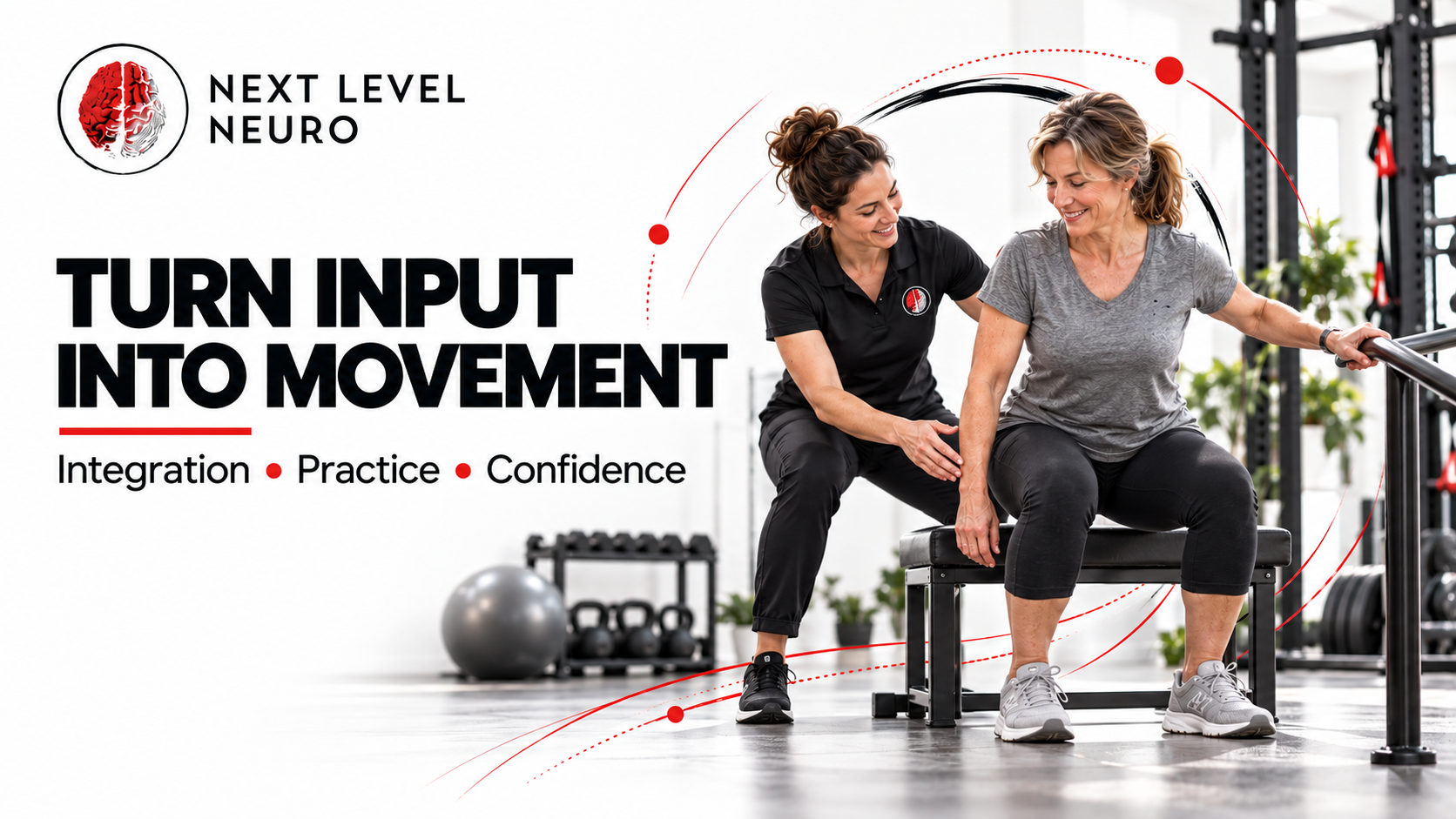
24. Why do some clients avoid movements they appear physically capable of performing?
What you see in an assessment may differ from what the client expects to happen.
A person may demonstrate enough strength for a task and still worry about pain, losing balance, or repeating a previous injury.
The movement may also involve demands your assessment hasn’t captured.
Before assuming they lack motivation, ask your patient....
“What concerns you about this movement?”
Their answer can help you choose a useful starting point.
Perhaps they need support, a smaller range, a lighter load, or a clearer explanation.
Agree on a manageable version and build from what they can do confidently.
Physical capability and confidence both matter.
A successful progression gives the client opportunities to experience the movement as manageable without feeling pressured to ignore their concerns.
25. Does better performance in a controlled session carry over to sport and everyday life?
It can, but you need to check.
A quiet room with clear instructions is different from a busy sidewalk, a fast game, or lifting something while talking to another person.
Once a client can perform a task reliably, consider which real-life demands need to be introduced gradually:
- More speed.
- Different loads.
- Changes in direction.
- Less predictable timing.
- A second task.
- A different environment.
You don’t need to add everything at once.
Choose the demand that is most relevant to their goal and observe what changes.
Ask whether the improvement is useful where the client needs it.
That gives your progression a purpose beyond producing a better result during the appointment.
Put These Ideas Into Practice
These questions bring us back to a practical challenge: How do you decide what a client needs next?
The Neuro Advantage gives you a framework for organizing that decision, covering regulation, fueling, sensory inputs, integration, and reactivity. The approximately two-hour training includes 16 tools you can begin testing within your practice and is currently available for $37.
For a free introduction to the regulation side of this work, start with Regulation Is the New Strength.
👉 Watch the free Regulation workshop
Want more information on our Mentorship
and Programs?
We hate SPAM. We will never sell your information, for any reason.